At Tyntesfield we believe it is of crucial importance to create an atmosphere in which all pupils: feel secure; know they are valued as individuals; are encouraged in their learning, growth and social development in a healthy and safe environment.
Our curriculum encourages the development of skills to equip pupils to deal with the challenges they face in life, as well as providing opportunities for pupils to exercise individual and social responsibility. As a staff we share responsibility for the care and welfare of all pupils, working alongside the pastoral care team to support the needs of all pupils.
At Tyntesfield we aim to encourage and develop pupils to:
- be interested in learning and with a keen sense of personal worth
- be confident in relationships with peers, parents, teachers and other adults
- be able to cope with success and failure; joy and sorrow; the ups and downs of everyday life
- demonstrate a responsible attitude towards self and others
- be able to apply a range of coping strategies to suitably manage a situation
- have a fundamental understanding of social skills necessary for adult life
- Develop a resilient attitude to overcoming personal difficulties

Pastoral Support
Pastoral Support Team
Mr Rogerson
ELSA trained Pastoral Support
Mrs Rouse
Branching Out
Mrs Gilmore
Branching Out
Mrs Shea
EYFS Pastoral Support
Mrs Walmsley
KS2 Pastoral Support
Mrs Jones
KS2 Pastoral Support
Mrs Wainwright
Across School Pastoral Support
Mrs Bennison
Across School Pastoral Support
Herman
Dog Mentor
Miss Chester
Pastoral Lead
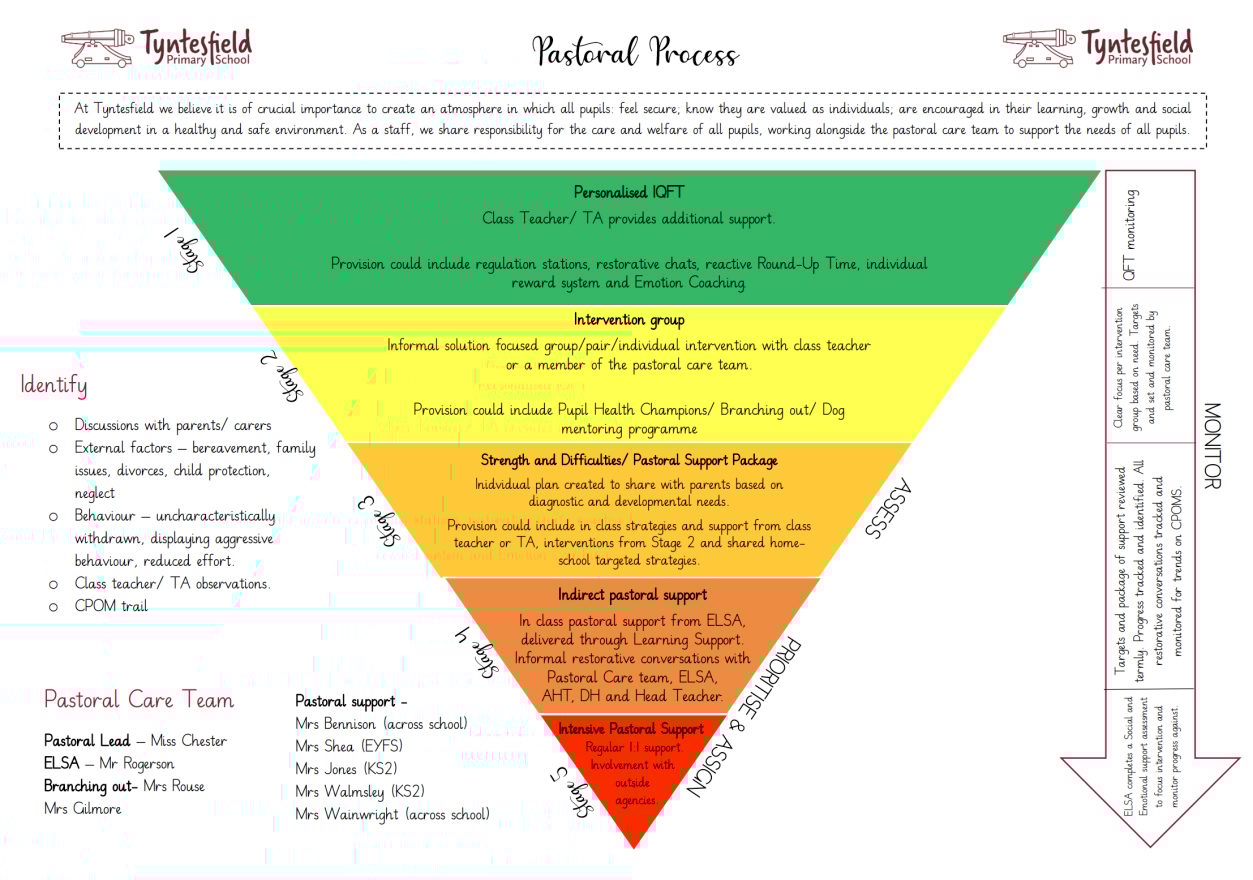
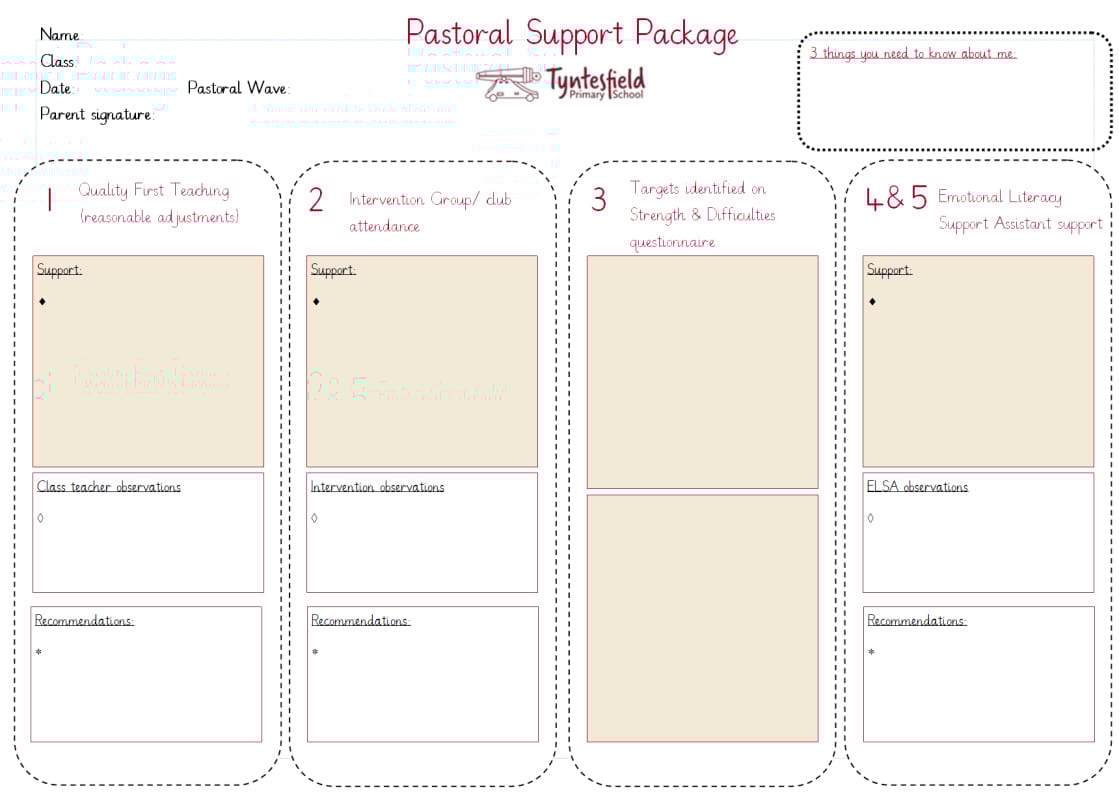
Any pastoral concerns raised by a member of staff about a child will be shared with parents. As a parent, you have the right to refuse any form of pastoral intervention for your child. Pastoral support will be provided initially by the class teacher or member of the pastoral care team, in the form of 1:1 or group interventions. If no further improvement is made, key adults within school and the Pastoral Lead will create a Pastoral Support Package which aims to highlight strengths and areas for further support, providing a clear overview of any social and emotional needs and personalised targets. This process will always be completed with the support and input of the parents and child.
Example Pastoral Support Package:
Pastoral Referals
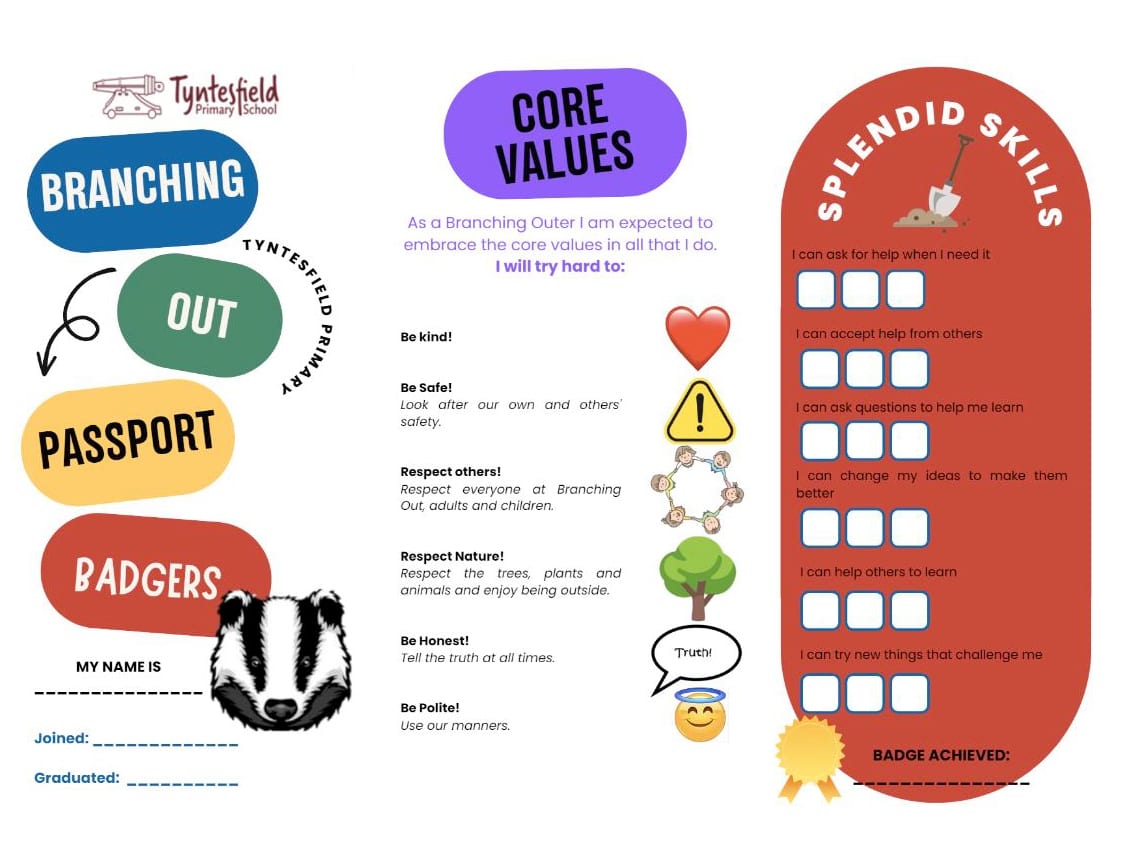
Branching Out is an element of support provided by the pastoral department at Tyntesfield. Branching Out sessions are carried out in the school’s woodland area, incorporating elements of Forest School. The premise of the sessions is to deliver pastoral support for children who may require social, emotional and communication intervention. The woodland area is used during the sessions due to the proven restorative impact of nature, specifically when engaging with nature over a regular period of time. Pupil progression towards key social / emotional goals (personalised for each pupil) through focussed activities will be assessed. Assessment includes analysing behaviour records, class teacher feedback and academic progress and completing Branching Out Passports with associated badges.
Branching Out - Pastoral Intervention
We believe that adults working together with children to build awareness of mental health and wellbeing will contribute towards a whole school approach and culture.
Street and Herts (2005), ‘Using the knowledge, skills and experience of children and young people in a planned and structured way to understand, support, inform and help develop the skills, understanding, confidence, and self-awareness of other children with whom they have something in common’.
Our Pupil Health Champions will sit at Stage 2 of the Pastoral Process, supporting individuals selected by the pastoral care team.
The programme entails four short training sessions delivered across the Autumn term for selected Year 5 and 6 pupils. These sessions further enhance skills in supporting the emotional literacy of others. This might include supporting their peer with problem solving, friendships, playground games and working as a team. The mentors are then be assigned to support a child or a group of children in the younger year groups. This could involve a weekly session facilitated by a member of staff, refereeing a game during playtimes/lunchtimes or playing group games to support with social communication skills.
Pupil Health Champions - Pastoral Interventions
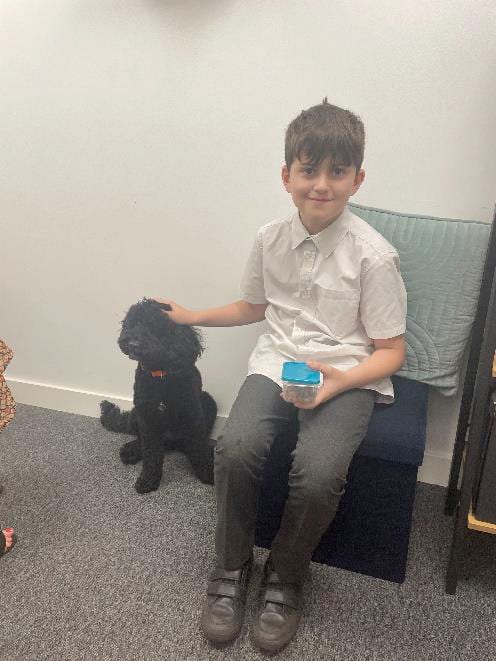
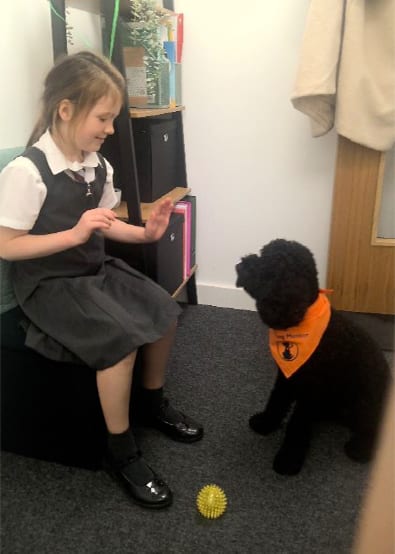
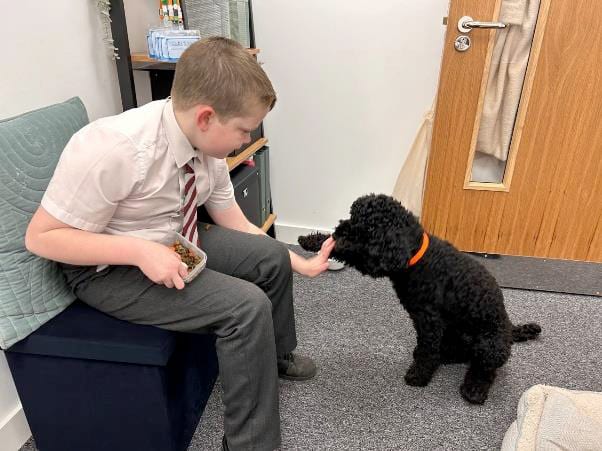
The Dog Mentor Programme has built upon the benefits of the human-animal bond by providing children positive experiences with dogs that can help them educationally, developmentally, emotionally and socially. Through the Dog Mentor Programme, pupils increase their understanding of responsibility and develop empathy and nurturing skills through contact with a calm, suitable dog. In addition to these benefits, children take great enjoyment from interaction with a dog.
Herman our Dog Mentor has been assessed by Jenny Duckworth, who is an outstanding dog trainer with extensive experience in the study of neuro-linguistic programming. As an affiliated Dog Mentor school, we have access to Jenny’s experience, pastoral support programme and updated risk assessments for Herman the dog.
Dog Mentor Programme - Pastoral Interventions
Benefits of a school dog
- Attendance
- Behaviour difficulties may occur in school and these can interfere with learning. Dogs can be used to improve behaviour problems by promoting positive behaviour in students.
- Reading programmes with dogs are doing wonders for some students. Children who might be embarrassed to read aloud to the class or even adults are likely to be less scared to read to a dog. Dogs give unconditional acceptance, as they are non-judgmental, which is especially crucial to struggling, emerging readers.
- Social Development: Dogs in school offer an opportunity for improving social development. They are especially useful for teaching students social skills and responsibility. Specifically, schools are using dogs to help older students build self-esteem; learn about positive and negative reinforcement, responsibility, and boundaries. Older students use dogs to help communicate, teach kindness, and empower students.
- Support Dogs can work with students on a one-one basis and will especially help those students who have been going through upsetting/difficult times or even scared/phobic of dogs. The dog will bring much joy and help to all the students they meet and are happy to provide plenty of hugs to the students they are spending time with. Students who struggle with social interaction can find a reassuring friend in a dog.